




The impact of Artificial Intelligence 2025 technology is seen today in various business productivity services such as digital assistants. As we look forward to 2025, we expect much more than we could have imagined in 2020, as AI is composed to change the landscape of business, education, and healthcare. This standard covers the development of AI in the year 2025, as it sets about the most important innovations, the impact it brings, the issues it presents, and the development it indicates.
In 2025, AI is expected to support lots of advanced technologies, enabling new possibilities in business productivity and educational services. Anyone working in marketing, education, or healthcare today can appreciate the huge amount of transformation AI has brought. In simple terms, one can define AI as the usage of advanced algorithms and digital technologies to gather data, think critically, and learn patterns to be more efficient. The ability of AI technology to recommend what users would want to view next is one of the wonders in the AI world today.
What is Artificial Intelligence (AI)?
Learning and changing behavior using data has mostly been studied in a few research areas. AI and computer science have worked hard to copy how learning works by using computer programs and simulations.AI can learn from new information and follow rules to do tasks well. It includes different areas like robots, helping computers see (computer vision), understanding human language, and learning from data (machine learning).
Thanks to advancements in the following, AI has become more advanced in the year of 2025:
AI systems capable of undergoing improvement with time:
Natural Language Processing (NLP): chatbots understanding and generating human language, such as ChatGPT.
Recommendation systems on YouTube and Amazon.
Pattern recognition systems in image and speech applications.
AI’s impact is undeniable in areas such as: smartphones, healthcare, and finance, as well as other sectors.
Types of Artificial Intelligence(AI)
Artificial Intelligence 2025 can be categorized by its abilities and functions. Here are the main types explained in simple terms:
Narrow AI (Weak AI)
The most common type of AI in use today. It is limited to a specific function such as issuing YouTube suggestions, as well as recognizing faces in photographs and does not perform tasks beyond its selected programming.
General AI (Strong AI)
General AI concerns computers that can reason, learn, and make decisions as human beings do. They can automate and perform any intellectual activity a human does. It is still theoretical and has not yet been achieved as of 2025.
Super AI
Super AI surrounds machines that could outperform humans in every possible way including in creativity, emotions, and judgment. This type of AI is still to come and poses many ethical and safety challenges.
Reactive Machines
Reactive machines have no memory and cannot learn from experiences. They emerge from some processes or events. An example is IBM’s Deep Blue chess computer.
Limited Memory AI
These AI systems are capable of using past experiences to inform present actions. For example, self-driving cars use traffic patterns to determine when to take certain actions.
Theory of Mind AI
This AI, which is still under research, seeks to give machines the capability to understand human emotions, human beliefs, and human motives. This would create the ability for more interaction and is more human-like.
Self-Aware AI
This is still under research. Self aware AI would have its consciousness and be self aware. There is no existing type of AI this would obtain.
ANI vs AGI vs AS:
ANI (Artificial Narrow Intelligence) – Currently in this phase; an able to complete limited functions.
AGI (Artificial General Intelligence) – Aspires to conduct any intellectual activity a human is capable of.
AS (Artificial Superintelligence) – Machines are theorized to outstrip human intellect.
History of AI:How it all Started
It’s helpful to revisit how far we’ve come before examining present-day patterns:
1950s: A machine’s cognitive capabilities comparable to humans is put forth by Alan Turing, who creates The Turing Test to evaluate it.
1956 – The term “Artificial Intelligence” was first introduced at Dartmouth Conference.
1997 – Garry Kasparov loses a match of Chess to IBM’s Deep Blue.
2011 – Human champions of Jeopardy! Are defeated by IBM’s Watson.
2018 – Human-like phone calls are made by Google’s Duplex AI.
2023 – The advent of ChatGPT marked a new dawn in text generation AI.
By 2025, AI is no longer a brief concept, now it is an essential component of the digital economy, as a result of the progress made in the previous years it is now deeply placed in everyday functions.
How AI Works Step-by-Step
Let me explain how AI functions step by step.
Data Collection
AI systems, regardless of the industry, need appropriate volumes of structured and unstructured data, such as text, images, audio, and video. The quality of data and the amount of it directly affects an AI systems functionality.
Example: To train AI to recognize images of cats, it must be fed thousands of labeled images.
Data Processing and Cleaning
Just like collecting the right data, data cleaning also requires a significant amount of effort. It includes, but is not limited to: removing errors, resolving skipped data, and changing to appropriate formats.
Algorithm Selection
Data A.I collects requires an efficient and effective method for recognition, it also necessitates the use of a suitable algorithm, like a set of internal rules. The option of the algorithm also depends on the objective of the recognition: be it verbal, visual, or written.
Decision Trees
Support Vector Machines
Neural Networks
Random Forests
Training the Model(Machine Learning)
Different AI algorithms rely on different training data, ranging from previous company datasets to globally accessible training data.
Supervised Learning: The algorithm is fed with labeled data, for example emails which are marked as spam and non spam.
Unsupervised Learning: the AI is programmed to analyze non labeled datasets and its primary objectives is to uncover data patterns.
Reinforcement Learning – this is the form of AI that learns through trial and error, receiving feedback on its actions.
Testing and Validation
In examining the performance of the model, it needs to be evaluated against new data to see how well it works. Its performance on various tests is evaluated by the developers using metrics such as recall, precision, accuracy, and the F1 score. This helps identify possible overfitting, which is learning too much from the training data.
Deployment
Assuming the AI model gets evaluated positively, it gets integrated with its actual application. This could be in the form of a website’s embedded chatbot or a recommendation system in a shopping website.
Continuous Learning
The newest AI technologies actively seek new information. This gives the technology a chance to adjust to constant changes, as well as enhance itself over time.
How AI is Transforming Different Sectors in 2025:Real Life AI Examples
Healthcare
AI is crucial in early diagnostics and predictive healthcare through Ai :
Identifying early-stage cancers and other complex diseases with predictive AI algorithms.
Higher precision is provided through robotic surgeries.
Hopeless conditions are managed with the assistance of Virtual health aides.
Finance and Banking
Investments and fraud detection are being faired through AI powered algorithms. Some of AI’s impressive features are:
Customer relations are now managed by AI powered chatbots.
Credit scoring via substitute data.
Real time learning provides Algorithmic trading with the ability to learn and adjust.
AI in Cybersecurity
AI helps fight cyber threats by finding weak spots before hackers can attack.
AI-powered antivirus programs can automatically stop malware attacks.
Retail and E-Commerce
AI in retail allows for:
Recommendations adapted for every individual through deep learning systems
Predictive analytics for inventory management.
Virtual assistants improve the customer experience.
Transportation and Mobility
The expected widespread use of self-driving cars is progressing.
AI is improving management of traffic and optimization of routes.
AI is applied to adjusted pricing and driver dispatch for ride-sharing services.
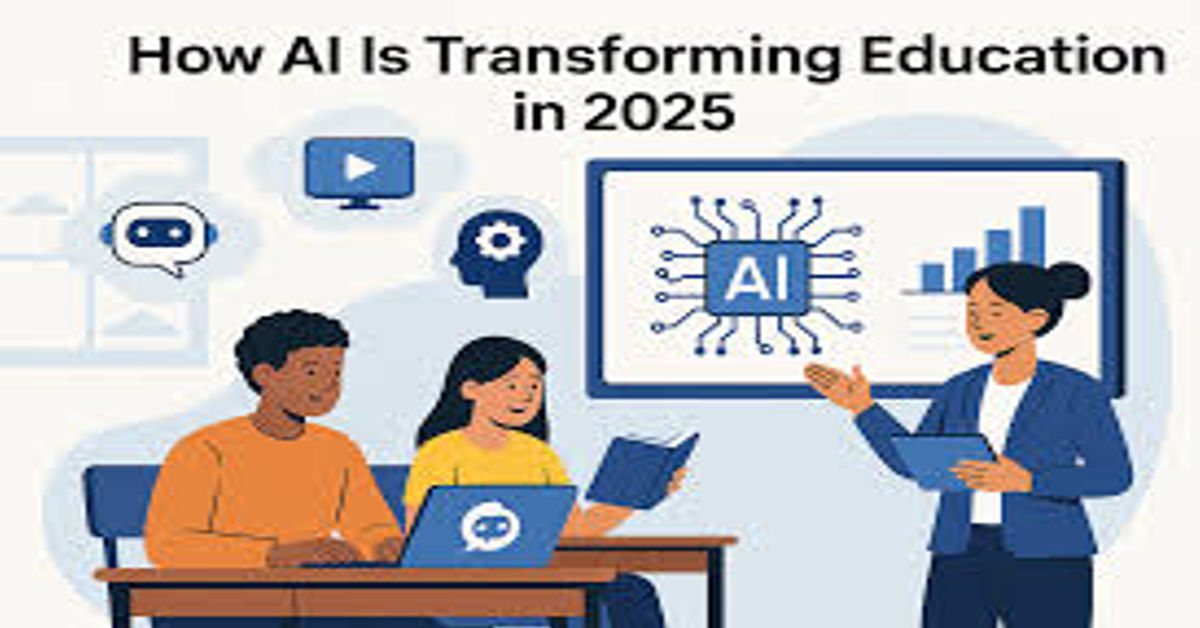
Education
The impact of AI on education includes:
Grade level AI instructors.
Grading automation.
Personalized learning AI.
Top AI Models You Need to Know in 2025
Top AI Models : You should know about
Listed below are some of the rising AI models expected to impact 2025 the most:
ChatGPT (OpenAI)
A powerful and well-known for its human-like text generation language model. Its applications include chatbots, content generation, and coding help.
Claude (Anthropic)
Focused on safety and alignment, Claude is known for its ethical reasoning, useful in enterprise and educational AI spreadout.
Gemini (Google DeepMind)
A multimodal model that understands and processes text, images, audio, and video. Employed in search, productivity, and creative tools.
Sora (OpenAI)
It is a text-to-video AI model that produces high-quality videos from prompts. It is transforming media, advertising, and education.
DALL E (OpenAI)
It creates images from text instructions and is widely applied in design, marketing, and other creative fields.
MidJourney
An independent artistic and stylized image-generating AI model. It has gained importance among designers and artists.
Whisper (OpenAI)
An AI model specializing in voice-to-text transcription. It is beneficial in readiness, translation, and voice-driven services.
LLaMA (Meta)
This is a family of open-source large language models intended for research and business use.
Bard (Google)
This is Google’s conversational AI model connecting with Google search and productivity software.
Copilot (GitHub + OpenAI)
Works as an AI co-developer. It aids programmers by offering code snippets and automating simple and repeated software development tasks.

These models form the basis of the most advanced research in natural language, image generation, speech, and many other fields, determining the extent to which AI is combined into common instruments and infrastructure.
Must-Know AI Tools in 2025
In the context of AI systems completely combined into workflows, there has emerged the need for tools that can aid professionals, students, and even content creators in accomplishing tasks with increased productivity and creativity. Following is a list of the most important AI systems for 2025.
ChatGPT (OpenAI)
Used in writing, brainstorming and tutoring sessions, coding, and customer support. It is beneficial in many fields.
Notion AI
Works inside Notion to help with summarizing and writing content as well as managing tasks to some extent.
GrammarlyGO
An AI-based professional writing aide which refines clarity, tone, and correctness.
Copy.ai
A tool designed for marketers and content creators to automate the crafting of ad copies, social media updates and product descriptions.
Jasper AI
Widely known for the automation of content marketing for long-form pieces, especially within agencies and content marketing groups.
Synthesia
AI video production with avatars used for corporate video training, product demonstrations, and other educational materials.
Runway ML
In the video editing space and other creative efforts. Contains powerful generative AI tools such as background removal and style transfer.
Descript
Works for video and podcast editing with AI-powered interfaces based on text.
Perplexity AI
For students and professionals, a research assistant that answers complicated questions.
Quillbot
A tool for writers that paraphrases to assist in rewriting, summarizing and boosting the quality of writing.
These solutions are revolutionizing content and communication innovation for 2025 alongside collaboration and productivity.
Emerging AI Technologies in 2025

1. Generative AI
ChatGPT, MidJourney, and Sora are already established, and by 2025
Entertainment, coding, marketing, and content creation space will be able to utilize generative AI.
It will also be adopted by businesses for workflow automation.
2. Edge AI
This type of AI processes data on the device rather than on the cloud, resulting in:
Better responsiveness.
Enhanced privacy and protection.
Use cases in smart wearables, observation, and manufacturing.
3. Explainable AI (XAI)
With AI being accessible and united into processes, the focus shifts to transparency. XAI works on:
Understanding the logic of AI decisions.
Maintaining oversight in regulated industries such as healthcare and finance.
4. Quantum AI
Envisioned for 2025:
The application of quantum computing principles to AI.
Possible advancements in optimisation problems and in drug discovery.
Ethical and Social Implications of AI in 2025
Bias and Fairness
Problems relating to bias on AI systems stem from the data it is trained on. In 2025:
Businesses will be responsible for the consequences of bias.
New regulations focus on promoting value and completeness.
Job Displacement vs Job Creation
Tasks will be given to AI, however, new positions also emerge. Notable changes include:
Loss of low-skilled, routine and manual work.
Increase in AI ethics, data science, and prompt engineering positions.
Privacy and Security
The boundary of usefulness and privacy becomes increasingly more delicate:
Concerns about security technology and its use.
There are emerging rules for governance such as GDPR 2.0 and specific laws for AI.
Misinformation and AI
The following are ways Generative AI can be used to spread misinformation:
The authenticity of information is now more difficult to find out due to deepfakes and AI content generation.
Tools for verification, as well as watermarking technologies, are created as responses to these deepfakes.
AI in 2025: International Relations and Policy
Stronger AI restrictions are being adopted by governments and bodies:
The European Union AI Act has been brought in full force.
The US has issued federal regulations on transparency regarding AI.
In China, AI usage is regulated and monitored in the media and finance sectors.
Countries are working towards the responsible development of AI. International groups such as the UN and OECD are working towards this goal.
The Influence of Artificial Intelligence (AI) on Climate Change and Sustainability
AI has become vital for solving global issues:
Forecast of climate conditions for the modeling of Climate Change.
Sharper focus on cutting operational costs by optimizing energy usage in smart grids.
The advancement of farming methods with the use of technology (precision farming) for more sustainable agriculture.
Conservation of wildlife through real-time tracking technologies with the use of drones and artificial intelligence 2025.
Post 2025: The Next Developments of Artificial Intelligence (AI)
Artificial General Intelligence (AGI)
Still considered theoretical,AGI is the next horizon:
AI systems capable of human-level cognition.
Moral questions will become increasingly difficult.
AI-Driven Humanoid Robotics – AI-Enabled Robotics and humanoid robots that assist in daily activities.
Human and AI Cooperation
2025 marks AI as a co-pilot supporting the following:
In creative processes.
In business for decision-making.
AI Accessibility

The rise of no-code and low-code AI aids non-technical users:
AI solutions can be implemented by individuals and startups.
Radical change across industry verticals.
AI System Classification and Identity
The growth of AI systems demands a distinct set of protocols:
API and framework synchronization for similarity at the system level.
International AI ethics gain attention.
AI and the arts: composing music, writing novels, and creating images.
The Skills and Careers with AI feature in 2025
In 2025, the roles of AI skills include:
Writing and designing AI systems:
Leading technology product teams
Creating strategic business plans
Foreseeing future developments
Analyzing AI regulations
Teaching AI systems
Suggested skills offer:
Data science tools and languages such as Python, TensorFlow, and PyTorch.
Statistics and analytics.
Business ethics and compliance.
Cloud computing infrastructures such as AWS, GCP, and Azure.
The Drawbacks of Artificial Intelligence (AI)
AI gives a competitive edge but has to be well managed. There is a potential for:
Human Control Reduction
The more automated AI systems become, the less human oversight is necessary. Progress in healthcare and defense are particularly at risk. Dependency turns out uncontrolled.
Security Weaknesses
AI systems are unsafe to specific cyber attacks. For instance, adversarial attacks, data poisoning, and other algorithm manipulations can undermine system integrity and AI security and safety.
Economic Inequality
In a negative way, AI is expected to widen the gap between organizations that are technologically advanced and those that are not. This is a clear illustration of how the digital divide can amplify existing socio-economic inequalities.
Lack of Transparency
In a bid to understand and audit the decisions made by AI models, many of them function as black boxes. This is especially worrying within sensitive fields such as criminal justice or lending which have significant implications.
Dependence and De-skilling
An over-reliance on AI can lead to a decrease in the skilled labor force. As automation takes on increasing responsibilities, the human skills and knowledge needed to perform those functions may decline over time.
Environmental Impact
Training larger AI models has a negative impact on the environment as it consumes a great deal of energy and other resources, especially if not balanced out by sustainable practices.
All of these issues can be solved with a single solution that encompasses policy, transparency, ethics, and AI design that is geared towards inclusivity.
Challenges in AI Adoption in 2025
While some progress has been made, the following challenges still exist:
Dealing with integration issues with legacy systems.
High costs of implementation for smaller firms.
Achieving compliance for data privacy and legal issues.
Public trust and acceptance.
Conclusion: Getting Ready for Artificial Intelligence (AI) In 2025 and Later
In 2025, Artificial Intelligence 2025 (AI) is expected to transform an entire industry as well as our daily lives. The impact of AI is evident in fields such as healthcare, finance, education, and even sustainability. Looking ahead, there is still work to be done in ensuring worth, ethical consideration, responsible features, and AI development. The focus AI policies need to be framed in a way that supports responsible development. The right attitude toward AI from industry and society alike will define our youth and change life as we know it.