




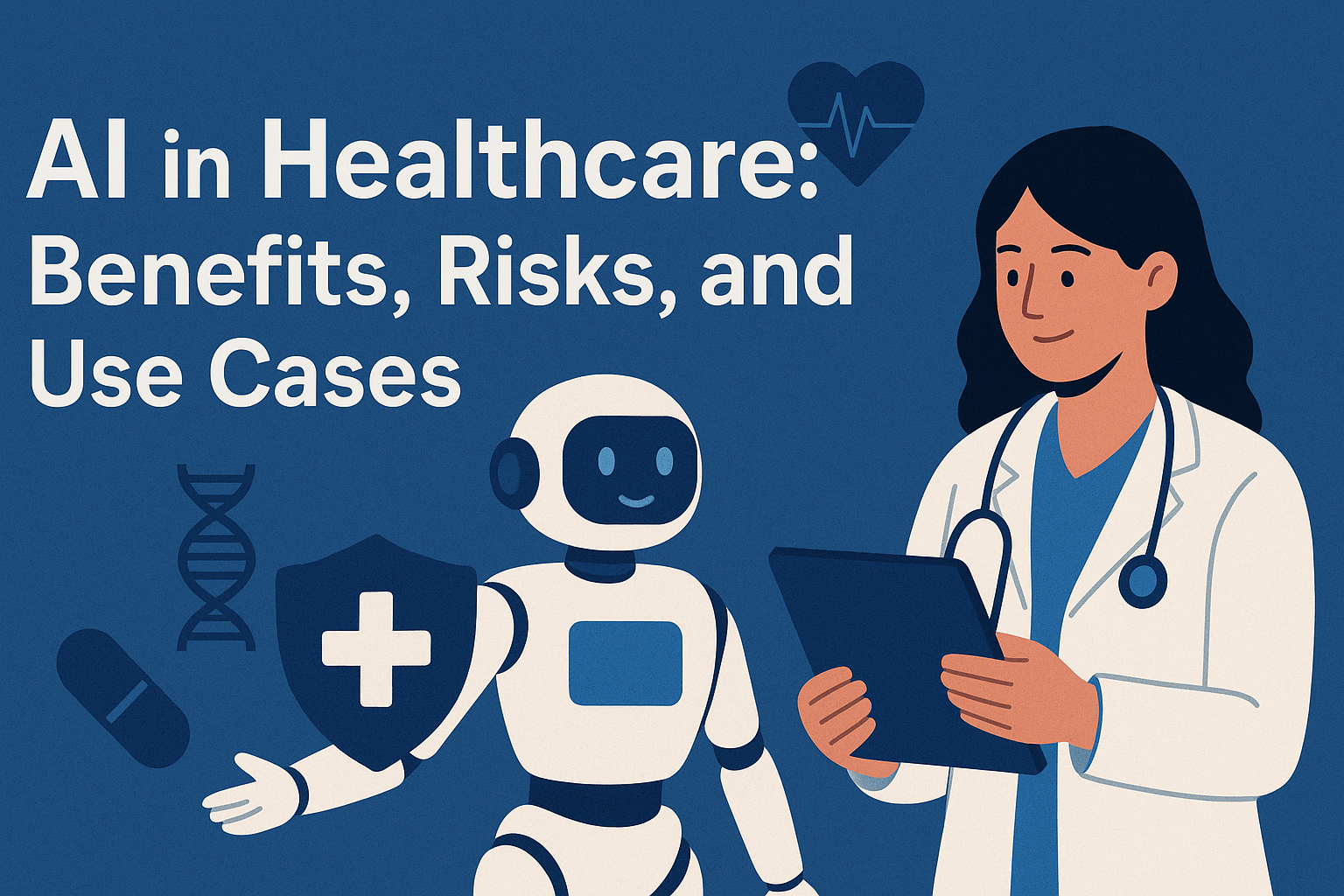
Many industries have seen rapid transformations due to Artificial intelligence (AI), and one of the most innovative uses of AI in healthcare. AI has become a game-changer in a variety of fields, including disease diagnosis, patient care, and hospital operations optimization. But there are drawbacks to innovation as well, such as moral dilemmas, privacy issues with data, and the requirement for human supervision.
The advantages of AI in healthcare, associated risks, and practical applications of AI in healthcare that are influencing the direction of medicine will all be covered in this article.
What Are the Key Benefits of AI in Healthcare?
AI has many advantages in healthcare, making it a useful tool for physicians, hospitals, and patients alike. Among the most notable benefits are:
1-Prompt and precise diagnosis
AI-powered technologies examine lab data, patient histories, and medical images to identify illnesses more accurately and earlier. AI systems, for instance, can detect heart problems, diabetic retinopathy, or malignant tumours before symptoms worsen, allowing for prompt treatment.
2-Tailored Therapy Programs
AI in healthcare analyses medical history, lifestyle factors, and genetic data to enable personalised medicine. In contrast to conventional one-size-fits-all methods, this enables physicians to customise treatment plans, guaranteeing better outcomes.
3-Better Medical Attention
AI chatbots and virtual assistants offer patients round-the-clock assistance by responding to medical questions, reminding them to take their medications, and assisting with appointment scheduling. In addition to improving patient satisfaction, this lessens the workload for medical personnel.
4-Efficiency in Operations
AI optimises staff schedules, manages supply chains, and cuts wait times to help hospitals run more efficiently. In the end, this lowers expenses and improves resource allocation, making healthcare more accessible.
5-Drug Development and Discovery
By examining molecular structures and forecasting how possible medications will affect the human body, AI algorithms speed up the drug discovery process. This can drastically cut down on the time and expense involved in creating new medications.
What Are the Risks of Using AI in Healthcare?
Although there is no denying AI’s advantages in healthcare, there are risks and difficulties that need to be considered as well:
1-Privacy Issues with Data
AI systems in the healthcare industry mainly rely on sensitive patient data for learning and Predictions for the Future of AI. Any misuse or breach of data could violate laws like GDPR or HIPAA and jeopardise patient privacy.
2-AI Algorithm Bias
AI models may generate erroneous or discriminatory results if they are trained on biassed or insufficient data. For example, some diagnostic instruments might not function as well in different populations.
3-Excessive dependence on technology
AI can assist physicians, but it shouldn’t take their place. Critical human judgement in difficult medical decisions may be diminished by an over-reliance on AI.
4-Expensive Implementation
AI deployment in healthcare necessitates a large infrastructure, training, and technology investment. Budgetary restrictions may make it challenging for smaller hospitals to implement AI solutions.
5-Legal and Ethical Difficulties
Liability issues—who bears responsibility if an AI system diagnoses a patient incorrectly—remain unanswered. Balancing AI effectiveness with patient consent and human empathy also presents ethical challenges.
What Are the Most Important Healthcare AI Use Cases?
The increasing number of AI use cases in healthcare demonstrates how AI is already transforming medical procedures:
1-Diagnostics and Imaging in Medicine
AI-driven imaging systems perform remarkably accurate CT, MRI, and X-ray analysis. Google’s DeepMind, for instance, has created artificial intelligence (AI) that can identify more than 50 eye conditions with the same accuracy as qualified specialists.
2-Health Assistants Online
Ada and Babylon Health are examples of AI chatbots and voice-based assistants that offer patients basic medical advice, symptom checking, and medication adherence reminders.
3-Patient Monitoring via Remote
AI-enabled wearables monitor oxygen saturation, blood sugar, and heart rate in real time. Remote patient monitoring by doctors can cut down on needless hospital stays.
4-Using Predictive Analytics to Prevent Disease
To forecast outbreaks, patient decline, or the course of chronic diseases, AI examines vast datasets. Predictive AI, for instance, can notify hospitals of possible intensive care unit requirements before a patient’s condition deteriorates.
5-Surgery Assisted by Robots
Robots driven by AI help surgeons operate more precisely, which lowers recovery times and complications. The use of these systems in neurosurgery, cardiac surgery, and orthopaedics is growing.
6-AI for Supporting Mental Health
Cognitive behavioural therapy (CBT) methods are used by AI chatbots like Woebot to assist people in managing their stress, anxiety, and depression.
How Is AI Shaping the Future of Healthcare?
With continued developments anticipated to transform medicine in the upcoming years, the future of AI in healthcare appears bright:
Integration with Wearables: Proactive care will be made possible by smart devices giving doctors access to real-time health data.
Extension of Telemedicine: AI-powered telehealth systems will increase accessibility, particularly in rural regions.
Genomic Medicine: AI will speed up genetic research discoveries, resulting in better disease prevention.
Augmented Human Decision-Making: Rather than taking the place of doctors, AI will assist them in making decisions.
Conclusion: Is AI in Healthcare a Boon or a Risk?
AI in healthcare offers ground-breaking advantages, including improved patient care, individualised treatment, and quicker diagnosis. When systems are developed in an ethical, secure, and transparent manner, the advantages of AI in healthcare clearly exceed the risks. But issues like algorithmic bias, data privacy, and ethical responsibility need to be addressed.
In the end, integrating artificial intelligence with human knowledge is where healthcare AI use cases truly shine.
AI will be a useful ally of healthcare systems, assisting them in providing quicker, more intelligent, and more patient-centered care, rather than taking the place of physicians.